The UK’s polar research vessel RRS Sir David Attenborough has departed for a six-week scientific expedition to south-east Greenland, where researchers will investigate how melting glaciers are affecting North Atlantic ocean circulation and the wider climate system.
The mission, which begins on 16 July, forms part of the Greenland Ice sheet to AtlaNtic Tipping points (GIANT) project, a five-year international research programme led by the British Antarctic Survey (BAS) and funded by the UK’s Advanced Research + Invention Agency (ARIA).
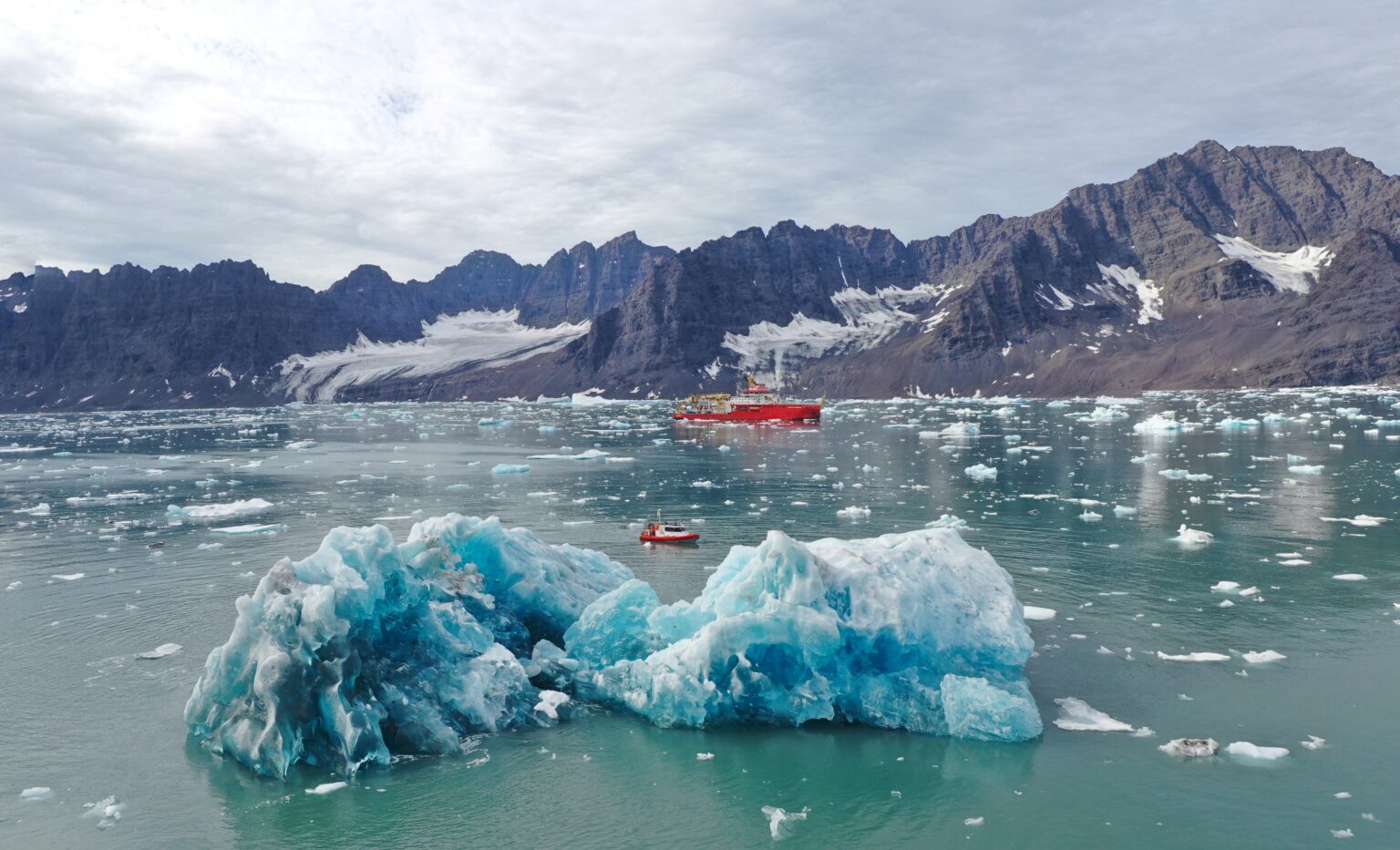
For the maritime sector, the expedition highlights the role of specialist research vessels as platforms for deploying advanced oceanographic technologies in remote polar environments.
RRS Sir David Attenborough will transport scientists and equipment to the Kangerlussuaq Fjord region of Greenland, where tidewater glaciers discharge large volumes of freshwater into the North Atlantic.
During the voyage, the vessel will support detailed surveys of fjord bathymetry, ocean temperature, salinity and current patterns while serving as the operational base for a fleet of autonomous and remotely operated vehicles designed to work in hazardous waters close to glacier fronts.
Researchers aim to improve understanding of how increasing freshwater input from Greenland’s ice sheet could influence the North Atlantic Subpolar Gyre and, in turn, the Atlantic Meridional Overturning Circulation (AMOC), a major system of ocean currents that transports heat around the globe.
Dr Pierre Dutrieux, an oceanographer at British Antarctic Survey who is leading the ocean robotics research on RRS Sir David Attenborough said:If we want to understand how glaciers melt and fracture, we need to be where the action happens – where the glacial ice meets the ocean. We need these ocean robots to do this – the glacier front is so unpredictable and dangerous, because huge blocks of ice calve into the ocean with little warning.
With the fleet of autonomous and remotely controlled instruments we have with us, some of the data we’ll be collecting will be the first of its kind. The DriX will give us a near-live feed of what is happening right at the glacier face – something we wouldn’t have thought possible even a few years ago.
A key element of the expedition is the deployment of multiple robotic marine systems launched from RRS Sir David Attenborough.
Among them is DriX, an autonomous surface vessel that will use sonar to map submerged glacier faces while recording oceanographic conditions, including temperature, salinity and current strength.
The vessel will also deploy coordinated Gavia and EcoSub autonomous underwater vehicles, which will operate closer to glacier fronts than crewed craft can safely reach, collecting measurements beneath the waterline.
Another system, Autosub Long Range, better known as Boaty McBoatface, will conduct dives to depths of up to 1,500 metres beneath dense fields of floating ice to map underwater conditions and study interactions between glaciers and the surrounding ocean.
Researchers will also use Meltstake, a newly developed instrument lowered from a remotely operated boat to drill into submerged glacier faces and directly measure melting at depths of around 100 metres.
Dr Kelly Hogan, a marine geophysicist at British Antarctic Survey who is leading the GIANT research project said:We’re in a moment where our tools have finally caught up with our questions. With autonomous vehicles, advanced sensors, and powerful modelling – boosted by AI – we can explore glacier-ocean interactions in ways that were unimaginable just a few years ago.
In addition to marine robotics, the expedition will employ airborne drones, satellite observations and shore-based monitoring equipment to build a detailed picture of glacier behaviour.
Commissioned in 2021 and operated by the British Antarctic Survey, RRS Sir David Attenborough was designed to support multidisciplinary research in both Arctic and Antarctic waters.
The Polar Class 4 vessel combines laboratory facilities with the ability to deploy helicopters, autonomous vehicles and specialist scientific equipment while operating in sea ice and remote polar regions. Its flexible working deck enables researchers to launch and recover a wide range of marine systems during expeditions such as GIANT.
The data collected during the voyage will be incorporated into ice, ocean and climate models, including the next generation of the UK Earth System Model, with the aim of improving predictions of Greenland ice loss and its effects on ocean circulation.
Researchers also intend to use the findings to support the development of an early warning system capable of identifying periods of rapid glacier change.