Bibby Marine has launched its brand-new, first-of-its-kind electric commissioning service operation vessel (eCSOV) at Armon Shipyard in Vigo, Spain.
Launched on Saturday 10 October, the vessel will carry the name Staffordshire, and entered the water during an event attended by members of the Bibby family, as well as senior Bibby Line Group representatives.
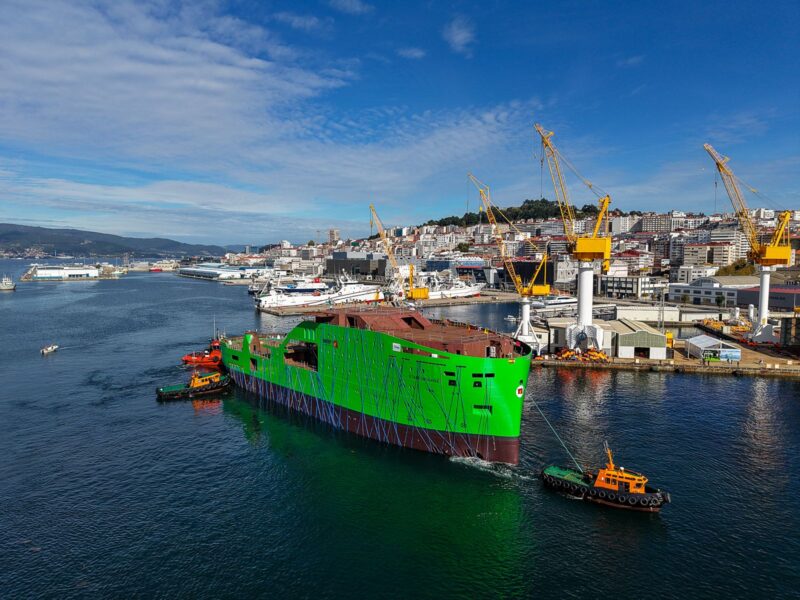
The Staffordshire name was chosen due to its ‘deep roots’ within the Bibby fleet, and this vessel will be the fifth to carry it. Previous vessels bearing the name sailed in 1894, 1929, 1950 and 1977, and each one marked a new chapter in the company’s history.
Jonathan Lewis, Group CEO at Bibby Line Group, said:The launch of Staffordshire is a proud moment for Bibby Marine and for everyone who has helped bring this vessel to life.
This is not just another vessel entering the water; it is a game-changing step towards cleaner, smarter and more efficient offshore operations. It shows what can be achieved when vision is matched by delivery – bringing together new technology, maritime expertise and a team committed to making change happen.
I am hugely grateful to colleagues across Bibby Marine, Armon and all our project partners. They should feel real pride in what they have built, and in the impact Staffordshire can have for our customers, our industry and the future of offshore wind.
The new eCSOV has been designed in order to transform wind farm operations by supporting offshore operations with modern capabilities, improved efficiency and comfort for those working on board. It has been developed around battery-first propulsion, with its energy storage system acting as the primary source of power rather than a supplementary one – a distinction from the more commonly used hybrid-assist designs.
Bibby Marine has partnered with Kongsberg and Corvus Energy on the vessel’s propulsion and battery systems, and is now working with Stillstrom to develop compatibility for offshore charging in an approach Bibby Marine has estimated will cut vessel operating costs by more than 40% in self-charging mode, rising to around 70% once the eCSOV is able to operate on offshore charging alone.
The project itself has been supported by 20 million GBP in funding from Zero Emission Vessels and Infrastructure (ZEVI), and forms part of a wider industry push to decarbonise offshore wind support vessels, backed by the growing global build-out of offshore wind capacity.
Over the next few months, the vessel will be fitted out at Armon Shipyard, including installation of its battery systems, ahead of delivery and a formal naming ceremony next year.