A.P. Moller–Maersk will install a Rotor Sail system developed by UK-based Anemoi Marine Technologies on one of its container vessels. This marks the first planned installation of the technology on a container ship.
The 8,700 TEU vessel, from Maersk’s Lima class, will be fitted with a fixed Rotor Sail measuring 5 metres in diameter and 35 metres high. Anemoi will design, manufacture and supply the system and support its engineering and installation.
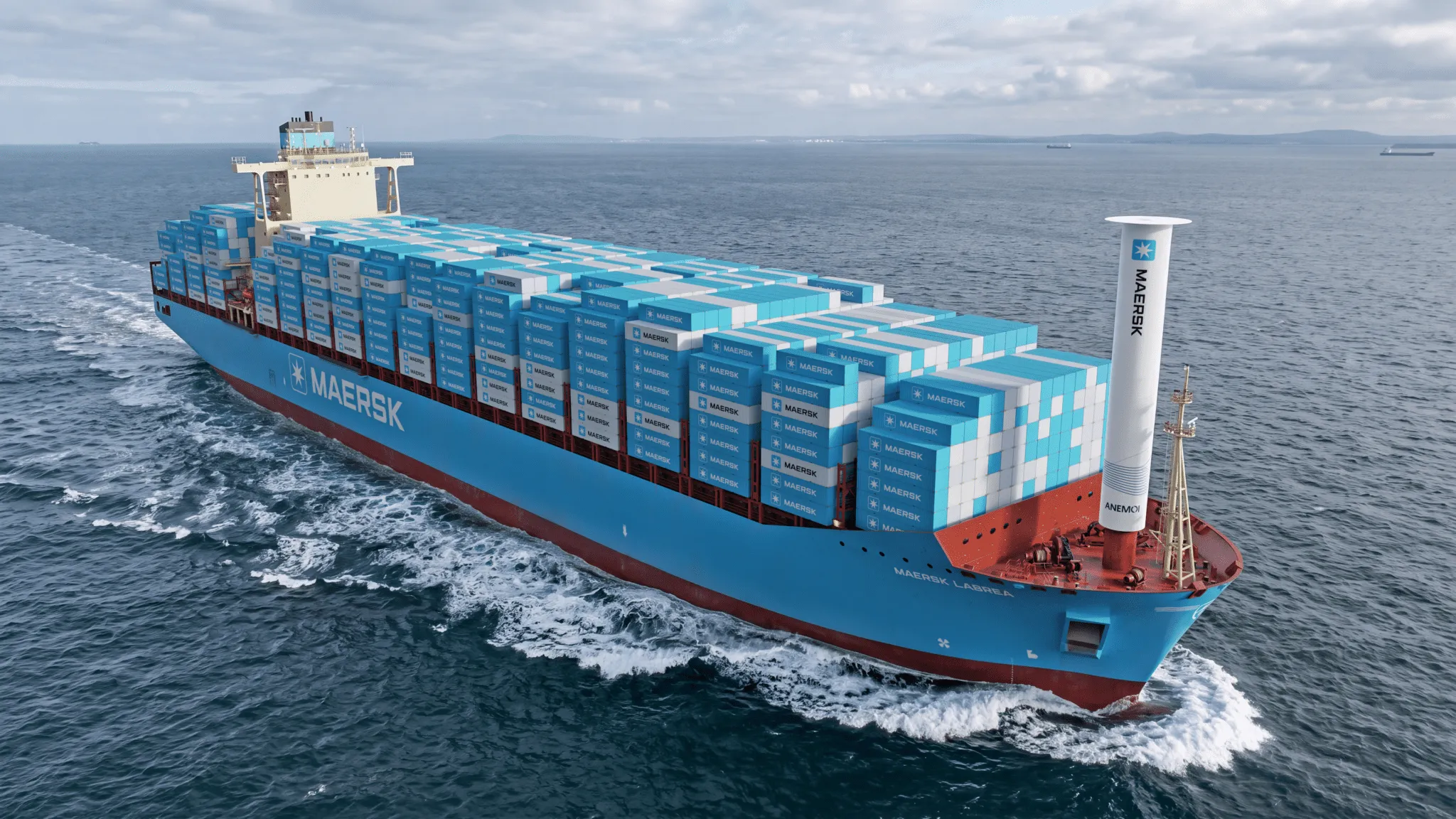
The Rotor Sail is scheduled to be installed in mid-2027. Following installation, Maersk will operate the vessel with the technology during its regular service, expected to include voyages across the North and South Atlantic.
Rotor Sails use the Magnus effect to generate aerodynamic lift from wind passing around a rotating cylinder. The resulting force provides additional thrust to the vessel, potentially reducing the amount of fuel required by the main propulsion system when wind and operating conditions are suitable.
Anemoi has previously deployed its Rotor Sail technology on vessels including bulk carriers. The Maersk project will provide an opportunity to assess the technology in container shipping, where vessels operate on established routes carrying a wide range of cargo.
Clare Urmston, CEO of Anemoi Marine Technologies, said:We’re delighted to be working with Maersk on this pioneering project. It’s a strong example of how collaboration can support the adoption of wind-assisted propulsion, and we look forward to carrying out the installation and working together as the project progresses.
Anemoi was incorporated in 2015 and has installed Rotor Sails on vessels operating on international trade routes. The company is now expanding the technology into additional vessel segments as the shipping industry looks for ways to reduce fuel consumption and greenhouse gas emissions.
The project forms part of the wider development of wind-assisted propulsion as a means of reducing emissions from commercial shipping. The International Maritime Organization’s greenhouse gas strategy includes a goal of reaching net-zero greenhouse gas emissions from international shipping by or around 2050.