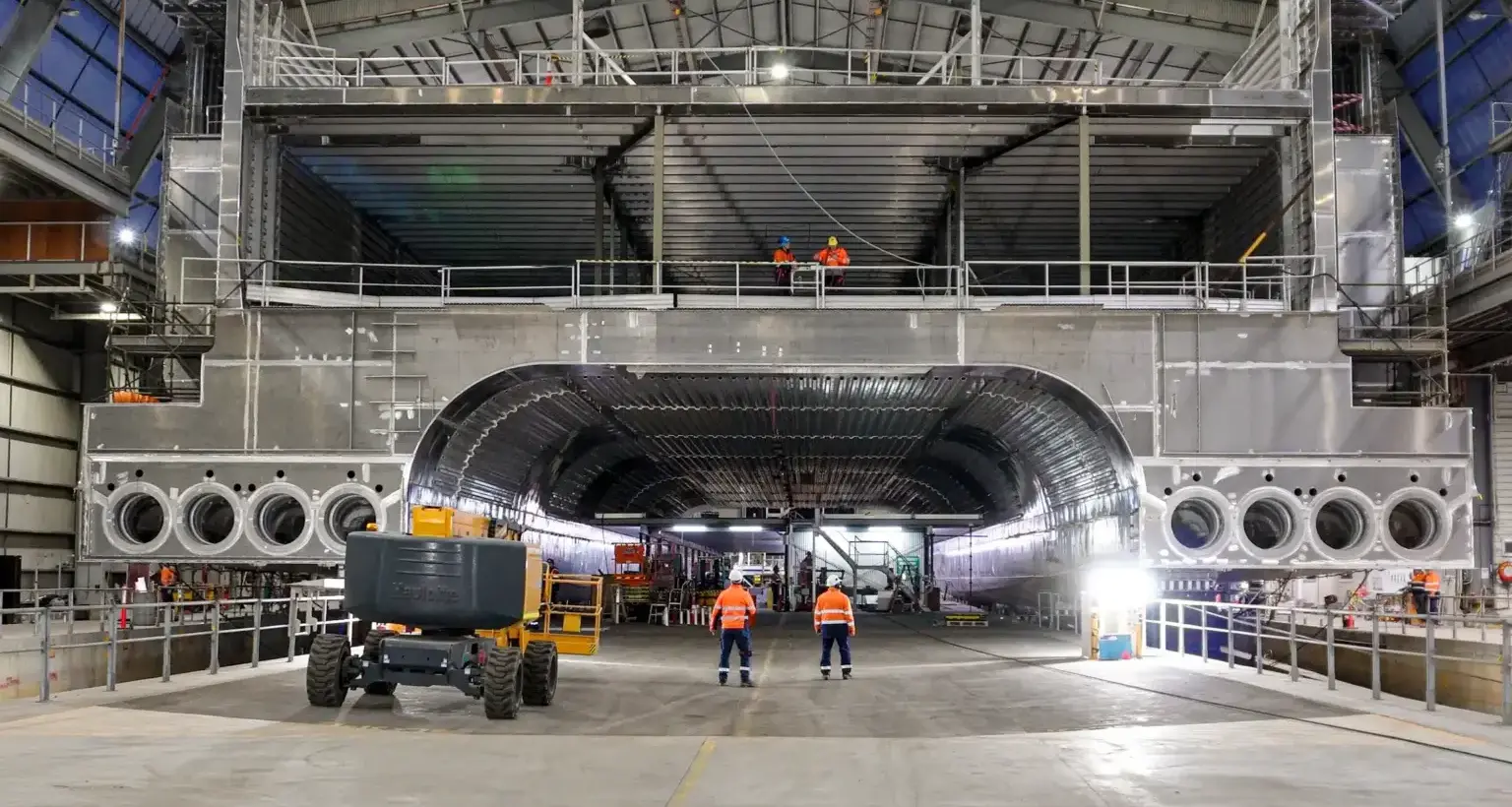
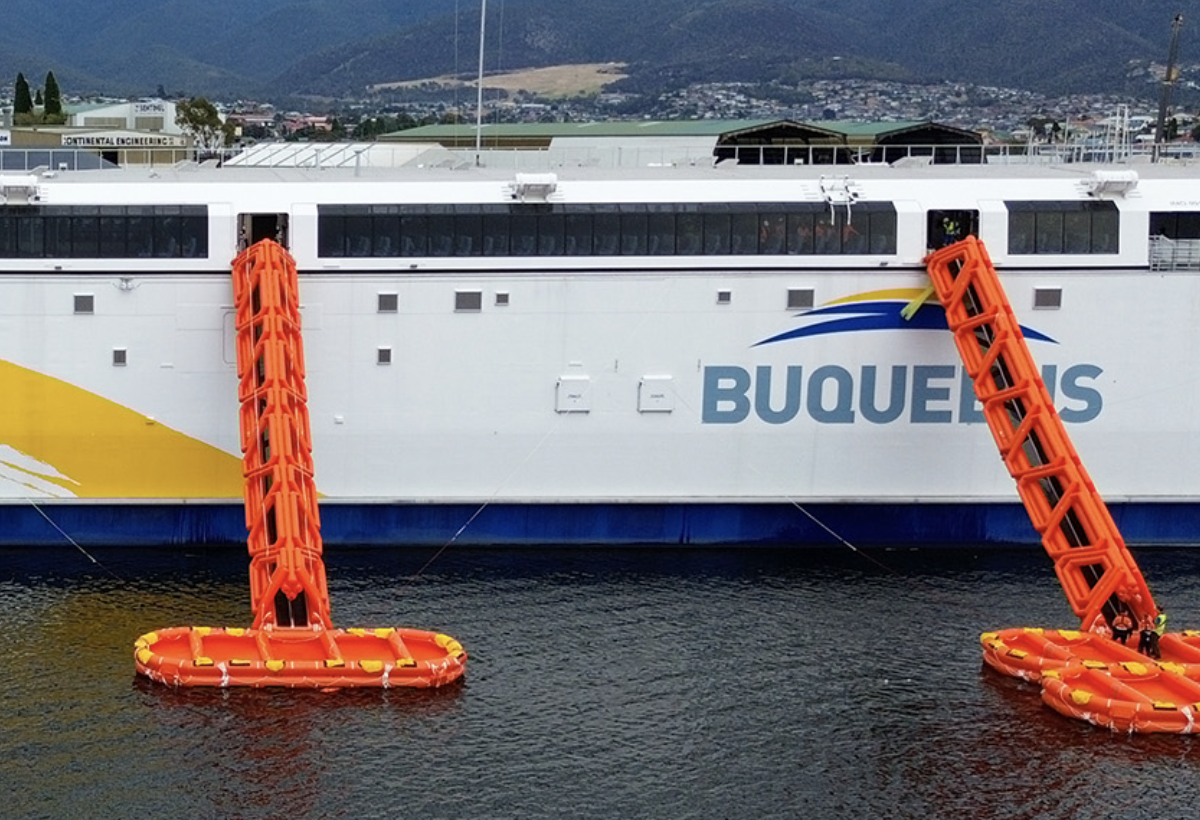
Incat has completed the loading of Hull 096, the battery-electric ferry destined for South American operator Buquebus, onto the heavy lift vessel Black Marlin ahead of its journey from Tasmania.
The operation took place on the River Derwent in Hobart and involved the semi-submersible heavy lift vessel ballasting below the waterline before Hull 096 was manoeuvred into position above its cargo deck. Black Marlin is now being refloated to lift the ferry clear of the water before final sea fastening is completed.
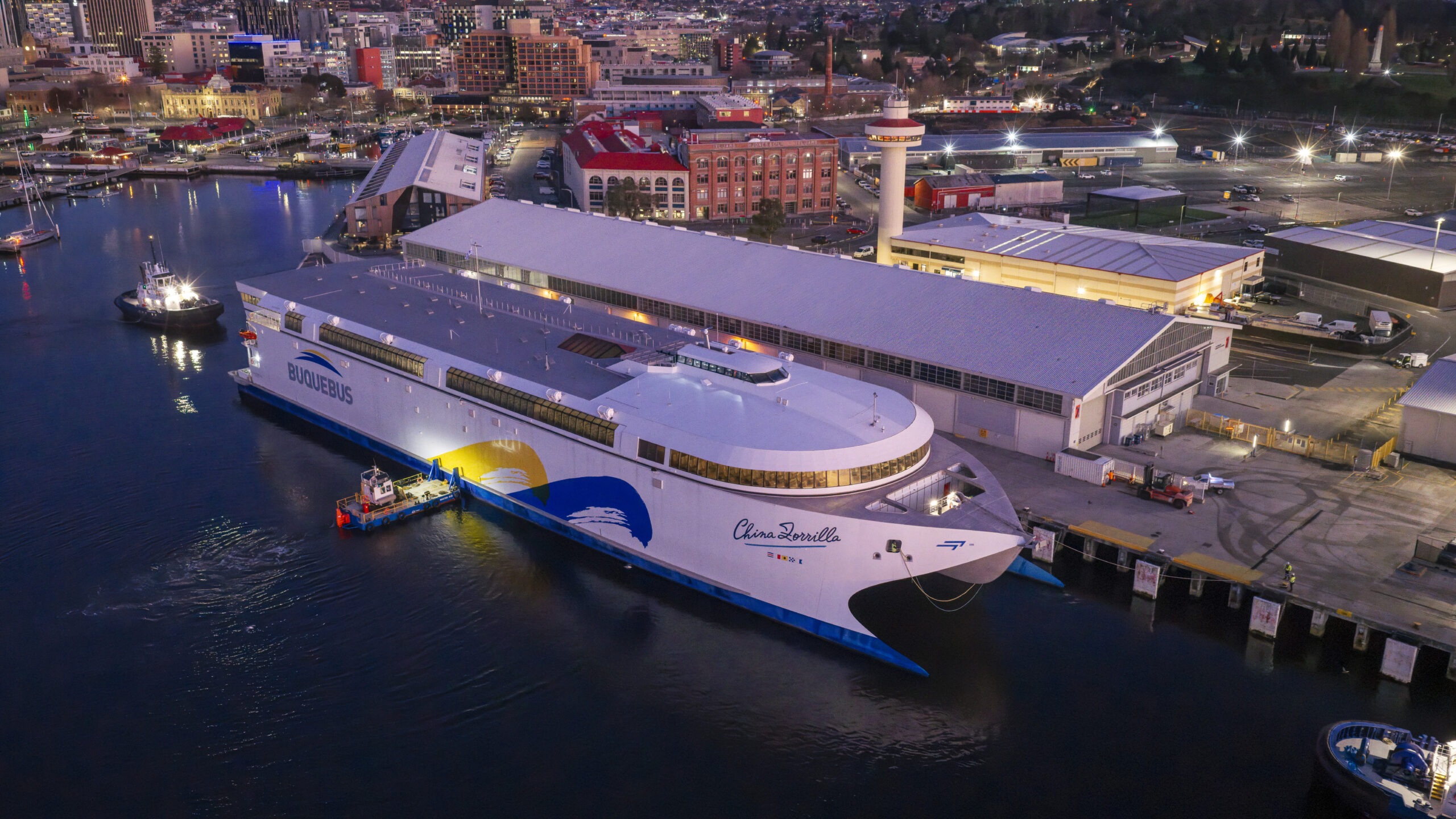
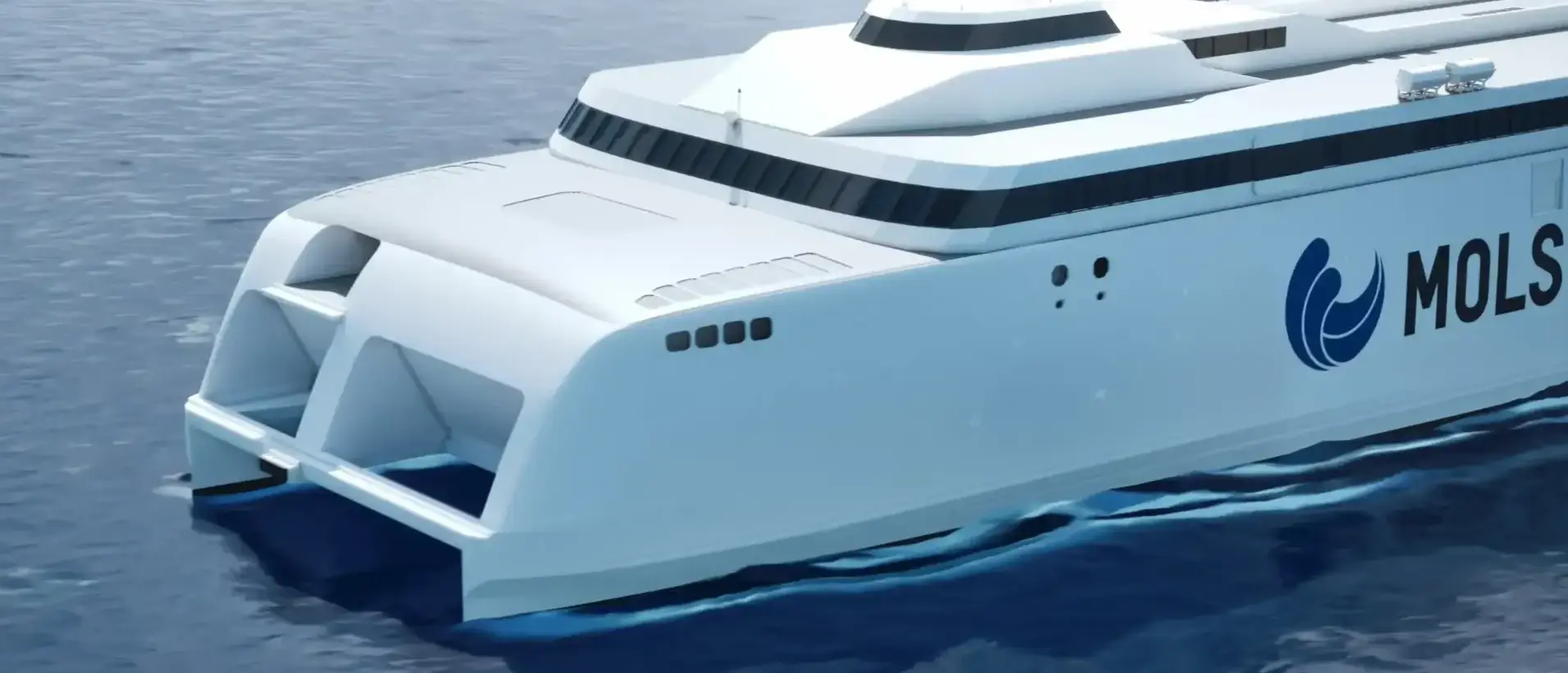
The vessel has been described as the world’s largest battery-electric ship. Its loading follows several years of design, engineering and construction at the company’s Hobart shipyard.
Hull 096 will now remain aboard Black Marlin while preparations continue ahead of the heavy lift vessel’s departure from Hobart. Once it arrives in South America, the ferry will be offloaded for final commissioning before entering service with Buquebus.
Incat Chairman Robert Clifford said:This is an extraordinary moment, not just for Incat, but for the future of sustainable maritime transport.
For years we’ve watched this vessel evolve from an idea into reality, and today we’ve reached another incredible milestone in the most significant project in Incat’s history.
Hull 096 has challenged convention at every stage. It represents the ingenuity, determination and craftsmanship of hundreds of people who believed we could redefine what was possible. To see her safely aboard Black Marlin and getting ready to leave Tasmania is a very special moment for the Incat workforce.
This vessel has captured international attention because it demonstrates that the future of high-speed, large-capacity ferry transport is here today.
We are incredibly proud that this technology has been designed and built in Tasmania and that it will soon be operating on one of the world’s busiest ferry routes.
Hull 096 is expected to operate on one of Buquebus’ ferry routes in South America following the completion of commissioning activities.