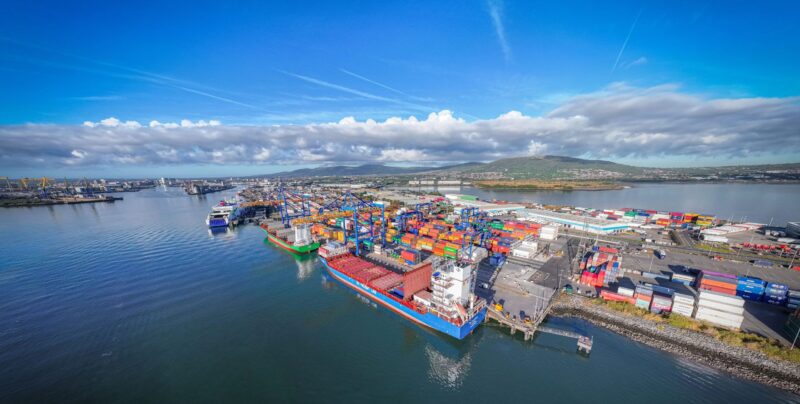
Belfast Harbour has launched a new 25‑year Masterplan which sets out 1.3 billion GBP of planned investment in an effort to ensure that the port remains resilient, efficient and competitive, supporting economic growth across Northern Ireland and the wider island for decades to come.
The Belfast Harbour 2025–2050 Masterplan: Horizons of Opportunity document sets out guidelines for how the Trust Port intends to expand and adapt in order to meet rising demand for trade, providing additional capacity and further strengthening the city’s position as a leading maritime gateway in the process.
A recent independent analysis by Ulster University and Grant Thornton have found that the proposed investments will underpin an increase in the overall economic output enabled by Belfast Harbour to approximately 12 billion GBP in Gross Value Added (GVA) annually from trade handled, as well as support nearly 5,500 construction jobs.
Developed against a backdrop of tightening port capacity across Ireland’s east coast; the Masterplan sees the port outline plans for increases in planned, sustainable capacity where it’s needed most in order to support trade flows, strengthen supply chains and enable growth.
External forecasts presented by Haskoning have indicated that trade volumes through Belfast Harbour currently stand to increase from roughly 24 million tonnes to over 30 million tonnes by 2050, and to between 40 million and 50 million under higher-growth scenarios.
Current scenarios forecast that growth will outpace current infrastructure without planned investment, with the Masterplan identifying a 1.3 billion GBP programme of investment in critical port infrastructure in order to support this growth.
It also sets out ways in which the Harbour Estate can continue to integrate port operations, logistics, clean energy and regeneration within a single, connected environment, with projects set to include completion of the 90 million GBP D3 deepwater cruise terminal; Belfast’s first land reclamation project in 25 years to create a new freight terminal at West Bank Road; redevelopment of the island’s longest deep water quay – Stormont Wharf; a berth extension to its container terminal for next generation vessels; the first shore power for docked vessels; construction of a new logistics park and a clean energy hub; and creation of a new maritime skills academy to support jobs in the sector.
Combined, these plans are intended to position Belfast Harbour as the primary maritime gateway along the Dublin–Belfast Economic Corridor (DBEC), as well as strengthen its role as a hub for Irish Sea trade and its link with Great Britain.
Additionally, the Masterplan identifies housing and real estate regeneration opportunities requiring additional investment of between 500 million GBP and 750 million GBP, with Belfast Harbour actively exploring delivery models and commercial partnerships in order to bring these projects forward.
Dr Theresa Donaldson, Chair of Belfast Harbour Commissioners, said:Belfast Harbour has served the regional economy for nearly two centuries as a Trust Port – adapting, investing and growing as trade has evolved and the city around us has changed. The port is not simply a feature of Northern Ireland’s economy – it is a cornerstone of it.
This Masterplan sets out a clear, long‑term vision for how Belfast Harbour will continue to deliver growth with purpose over the next 25 years. It is the result of two years of extensive engagement, and I want to thank the customers, tenants, government partners, and members of the public who helped shape it. Their input has ensured this plan is evidence-based, ambitious, and realistic, reflecting our responsibility to the economy, society, and the communities we serve.